There is a recognisable need for effective and efficient media methods of producing enough qualified teachers to meet the enormous increase in school enrollments at all levels of education, especially in developing countries.
There is generally a shortage of well-qualified and experienced teacher trainers. A teacher trainer should possess a good understanding of the educational enterprise itself.
As well as sufficient professional experience in supervising student teachers. Teacher trainers with these qualities are always in short supply.
To equip teachers
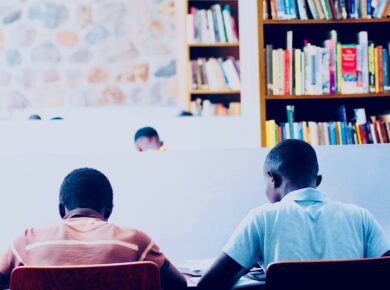
Facilities for training teachers in large numbers are limited in developing countries; for example, a lack of adequate classrooms, accommodation, study halls, libraries and laboratories is a problem.
Opportunities for systematic and well-coordinated practice teaching for beginning teachers are limited. Under the traditional method of training teachers, students are assigned to real classrooms to observe events that they have studied.
This method, according to Oriosky (1980), is unsatisfactory for many reasons. There is a lot of uncertainty as to what will actually happen in the classroom. This reduces learning to chance experience for the student teachers.
Because of the complexity of a typical classroom, it is difficult for the students, who are untrained observers, to isolate many of the significant events they are out to study. Again, classroom events are transient; they are over as soon as they occur.
They are therefore not available for re-study and analysis at an opportune time. In an age of knowledge explosion, there is a need to make student teachers aware of some of the products of technology that are being used to record and store information.
In addition, they should be able to acquire knowledge and skills in the effective use of various information media for themselves and for the pupils or students they will teach after pre-service training.
For the implementation of curriculum innovation
Many curriculum innovations cannot be implemented without the use of a wide variety of learning resources. A few examples of such innovations are individualisation of instruction, resource-based learning, learning how to learn, flexible scheduling and inquiry method of instruction.
The student teachers must therefore learn to see the significant role that learning resources play in curriculum implementation. It is now generally recognised that teacher education does not end with the period of pre-service training. It is a continuous exercise.
Therefore, educational materials and facilities should be provided for serving teachers to continually update and upgrade their knowledge and professional skills. An effective organisation and use of various media in education will encourage and facilitate this.
After all the factors listed above are carefully considered, educational technology can then be wisely and judiciously applied in teacher preparation. When this is done, it has the potential to perform the following functions:
For making learning more feasible
It makes learning more concrete, real, immediate and permanent on the part of the student teacher. It makes instructions more powerful by arousing and sustaining the interest of the student teacher as well as changing their attitude.
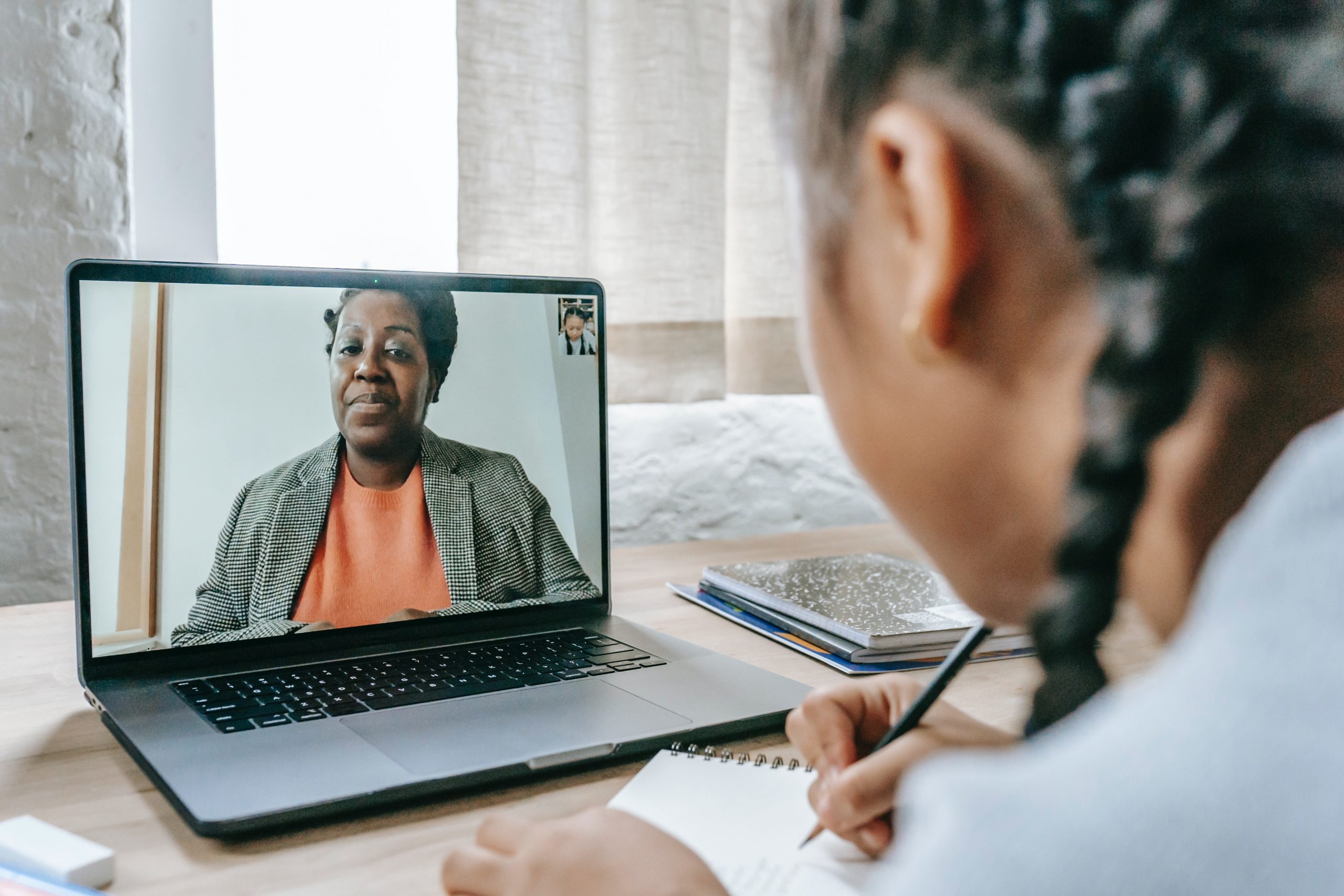
Introductory film and videotaped instruction can be used to demonstrate different teaching skills. Salawu (1998) found that videotaped instruction better enhances the performance of student teachers in basic teaching skills.
It provides the student teacher experience that is not easily obtained through other materials and contributes to the efficiency, depth and variety of learning.
It makes teacher education more productive.
It will also help the student teacher to acquire and develop a desirable attitude to work, to colleagues, to the pupils and to the school authority.
This is so because it is generally believed that he or she knows and therefore he or she must have some basic skills in how to teach, thereby enabling him or her to learn more in less time.
To support this, Ogunmilade (1984) explained that with the use of the systems approach (which is one of the basic concepts of educational technology) to instruction (teacher preparation inclusive), teaching becomes more purposeful, more scientific and easily quantifiable.
Imogie (198,5), quoting Army and D, summarised the functions of educational technology when he said that it can be used to:
- Improve instruction (qualitative):
- Educate more people (quantitative):
- Learn more about learning (research):
- Reform the curriculum (substance):
- Improve the process (method: and
Unfortunately, Nigeria is saddled with educational problems of great magnitude that the conventional methods of teaching and learning cannot solve. Among these problems are
- School population explosion
- Shortage of funds
- Knowledge (information) explosion
- Inadequate school facilities
Educational technology has the potential to solve these and many other problems, or at least reduce them to the barest minimum. All that is needed to apply it wisely, and these will go far towards reforming and revitalising our educational system.
For producing competent and effective teachers
Educational technology in teacher education centres on the production of competent and effective teachers who are capable of handling the educational process. Therefore, it should help the teacher acquire adequate academic and professional skills relevant to their professional practice.
For effective instruction
It could also acquaint the teacher with the technology of programme communication for effective instruction and the ability to carefully and critically analyse the task of education, as well as provide the skills to perform the task, considering the learners and the versatility and availability of such resources to be used.
For providing and managing resources
Educational Technology also has a role to play in the provision and management of these resources to meet the growing needs for modernisation and dynamics of the society and the educational system.
Applying Educational Technology to teacher education will create room for self-development, professional improvement as an aspect of maintenance culture in teacher preparation.
In this case, Educational Technology (E.T.) in teacher education: (i) provides a concrete basis for conceptual thinking, (ii) supplies the necessary basis for developmental learning, (iii) stimulates self-activities and continuity of thought and (iv) provides experiences which determine the efficacy of an educational programme.
However, it is important to note that, as an instructional goal, one should possess both a mastery of the subject matter and the desired professional skills.
The acquisition of all these calls for the adoption of various media of instruction in and for teacher education, and the requisite technology helps him develop his skills, and also helps in the instructional process. Read the similar post on this page.

 Editors



 adminate