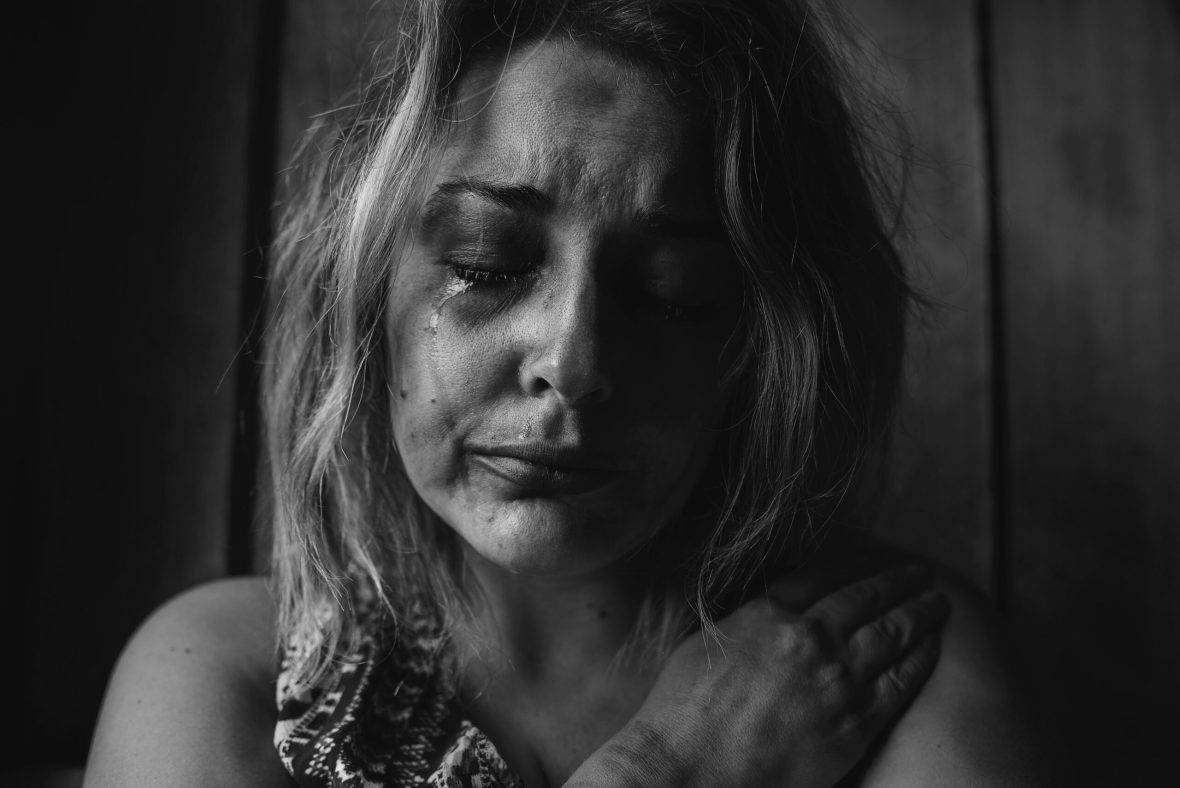
Nigerian women still suffer the burden of poverty, reeling heavily under the threat of hunger, with the majority of them living on less than one dollar per day. This is women’s vulnerability.
As primary agents of child care, Opaluwah (2007) describes women as victims of widespread and persistent discrimination in all areas of life who put their lives at risk every time they become pregnant. She further explains that women are still increasingly susceptible to HIV AIDS and other killer diseases.
Introduction
As unschooled adults, they have less to say socially and politically, and they are deficient in areas having to do with supporting themselves (Opaluwah, 2007).
This is evident in the HIV prevalence rate among female sex workers in Nigeria which has remained relatively high: 2.8 per cent in1991,7.9percent in 1993, 13 per cent in 1995 and 17.0 per cent in the year 2000 attendant strain on the health care system (Federal Ministry of Health, Technical Report, Abuja, Nigeria 2005).
Geographical Factors
In women’s vulnerability, there are economic, social, cultural, demographic, political and environmental factors that influence people’s health. These factors affect everyone’s health to some extent, but they have a particular status and the discrimination that flows from it.
This factor underlies, reinforces, causes and is caused by many of the others in the ‘vicious circle’.(Smyke,1991:25). They include poverty and homelessness, social and geographical mobility, sexual assault, civil unrest and, in particular, the way societies construct gender, masculinity and femininity (Smyke, 1991: 98).
Threat of Poverty
Prevalence patterns of HIV infection are known to be a factor in poverty. The groups of Nigerian women most vulnerable to HIV infection are those who are homeless and/or living in poverty. Increasingly, poverty is becoming a female phenomenon.
More women are heading households; they are the main financial providers may be because of their husband’s death, which consequently results in more women and their children living in poverty.
The coping options for women living in poverty are few, and more resort to prostitution as an economic survival strategy. This also intensifies women’s vulnerability.
Poverty is the outcome of women’s economic disempowerment. In Nigeria, women are more likely to be poor than men and to be among the poorest of the poor. This is due to the wide gap between the ‘better-off-poor’ and the ‘extremely poor’.
It is women who must cope and devise survival strategies when household incomes fall and prices rise (Elson,1989:70). Usually, unskilled and uneducated, many Nigerian women are obliged to accept whatever work they can find, often the most dangerous, back-breaking and least desirable.
The consequences for health
The consequences for their health and that of their families can be disastrous. At best, they face a slow, inevitable decline in vitality and premature ageing. Why must women work this hard just to survive?
If women must work this hard just to survive, there is little question of continuing their education, acquiring new skills or extending their participation in community affairs (Smyke, 1991: 26).
However, if poverty has a direct, dramatic and measurable impact on women’s health, there is another factor whose impact is equally powerful and all-pervasive: this is the status of women. The International Labour Organisation conceptualises the status of women as follows:
World’s Population
Women are half the world’s population, receive one-tenth of the world’s income, account for two-thirds of the world’s working hours, and own only one-hundredth of the world’s property (International Labour Organisation Report, 1980).
As part of the status traditionally assigned to Nigerian women, they are expected to play certain roles. In most Nigerian societies, women are expected to juggle several roles at once, and they are subjected to a great deal of stress when conflicts arise between their different roles. This happens occasionally in the daily life of every woman but is accentuated in times of crises or rapid change.
The Main Core of Women in Nigeria
In many Nigerian societies, women are wives, bearers and rearers of children; they are responsible for caring for the household; they are often food producers and almost always food processors and servers; they are fetchers of water and fuel; they are the ones who care for the sick and elderly (Smyke, 1991).
Sometimes, they are breadwinners as part of the paid labour force and as traders selling certain items; they are also volunteers working on community projects. In some societies, they must be hostesses, chauffeurs and so on; they are, in reality, the transmitter’s authority or official spokesman in this realm. It is usual to divide women’s roles into two categories, ‘productive’ and ‘reproductive’.
The Cultural Basis of Gender
With children, the private sphere (the domestic world of home, the public sphere (paid work, institutionalised religion and politics have also been invisible. This cultural basis of gender is apparent, especially when we look at different cultural contents. In most cultures, people think of men and women as dichotomous categories that are separate and opposite with no overlap between the two (Andersen, 1997:21).
The private sphere, having been identified with women, has been perceived as inferior; the public sphere is superior because it is identified with men. This conceptualisation of the public and private spheres reaches deep into our consciousness, as reflected, for instance, in the attitude that women’s relationships with each other in the private sphere are insignificant or trivial in the making of history, society and culture (Andersen, 1997:354).
Women’s Relegation
Consequently, women’s relegation to the private, domestic sphere excludes them from public life and thus, from equal access to social and economic resources. The factors responsible for this include, among many, the social construction of gender and patriarchy.
The social construction of gender refers to the many different processes by which the expectations associated with being a boy (and later a man) or being a girl (and later a woman) are passed on through society. This process pervades society, and it begins the minute a child is born. Women’s vulnerability is a serious issue.
Areas of Feminism
Feminists have located women’s relegation within the patriarchal culture and its control of women (Daly,1978). While women’s oppression, radical feminists argue that male domination defines patriarchy as a “sexual system of power.
l possess superior power and economic privilege” (Eisenstein,1979: p.17). Historical and political force. As a result, Mackinnon (1982) women’s sexuality as the central fact of the domination of women. “sexuality is to feminism what work is to Marxism”,(Mackinnon,1982: 515).
She describes sexuality as a social direction in which the expression of desire creates the social beings we know as women and men, and their relations create society (Mackinnon,1982: 515).
Mackinnon stresses that through gender socialisation, women and men come to. identify themselves not just as social beings but also as sexual beings. Sexuality is the primary sphere of men’s power in her radical feminist approach.
Racial Feminists
Many radical feminists view rape, sexual harassment, incest and violence against women, as the mechanism through which men exercise their sexual power over women.
They also conceive of heterosexuality as the institution through which men’s power is expressed, citing gender relations and the family as specific forms of compulsory heterosexuality.
Because radical feminists view heterosexuality as institutionalising male dominance, men’s control of women’s sexuality has been described as the linchpin of gender inequality. (Andersen, 1997:358).
All these factors increase Nigerian women’s vulnerability and place them at the centre of the HIV and AIDS pandemic, thus making the quest for social justice more paramount than ever.
The Idea of Social Justice
The concept of justice has largely been associated with the political philosopher John Rawls. According to him, “Each person possesses an inviolability founded on justice that even the welfare of society as a whole cannot override” (Rawls, 1971:3).
For this reason, justice requires that the loss of freedom for some is restated in his Political Liberalism, where society is seen as a fair system of cooperation over time from one generation to the next. You can read more related posts on our news page of the site.
 Editors
 adminate