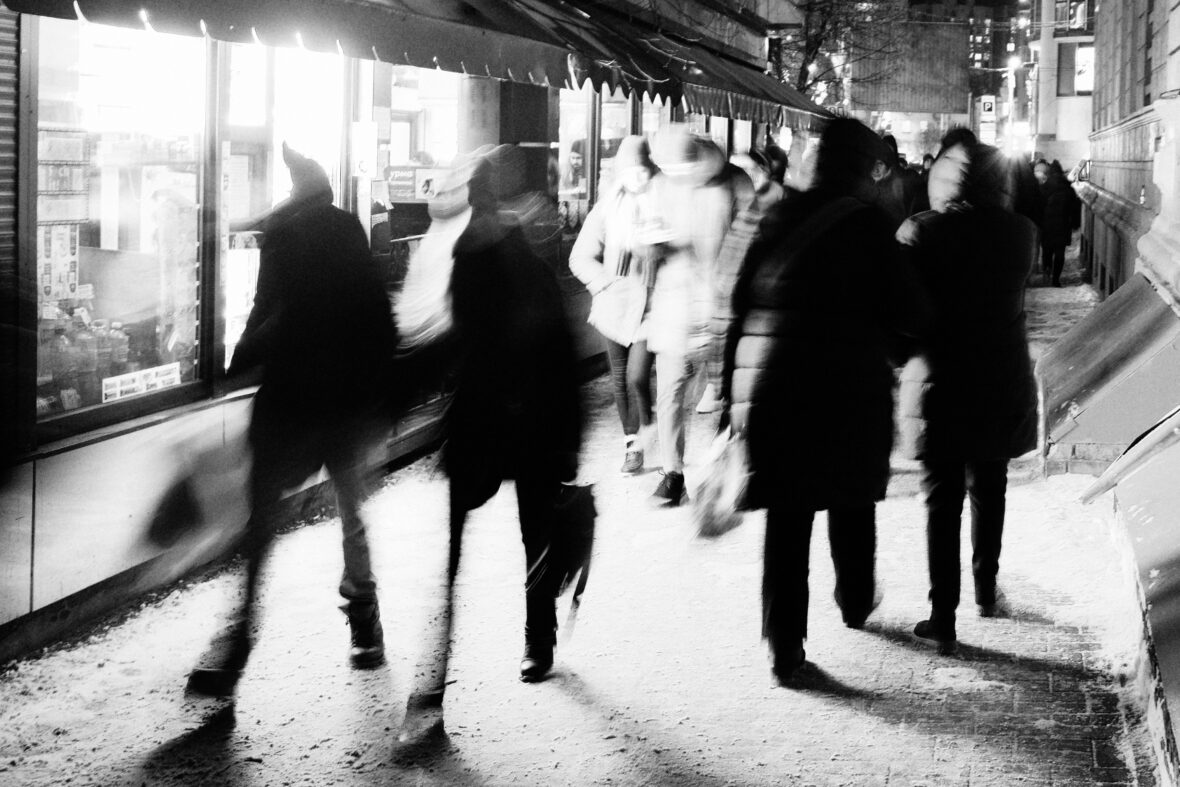
The rate of people, mostly youths, who are engaged in illegal migration has increased in recent times.
The majority of them are exasperated and lack confidence in the Nigerian government’s ability to implement a meaningful plan for them; hence, they are desperate to travel to another country for a better life.
Unfortunately, shortly after they get to their destination, they begin to face immigration problems as undocumented immigrants (refugees) without peace or freedom, and the country’s authority has no record of them.
They may also be persons who visit a country for tourism, education or health purposes legally but do not want to go back.
Even though such persons travelled with legal documents, they automatically become illegal immigrants because they have overstayed.
In a similar way, immigrants who have expired documents and those with fake documents all fall under undocumented immigrants.
What is Illegal Migration?
Illegal migration is when individuals relocate to another country in violation of the migration laws of that country.
Similarly, the United States Department of Homeland Security defines illegal immigration as any foreign-born non-citizen who is not a legal resident.
Many terms may be used for an individual who falls under this definition, like an illegal alien, illegal immigrant, undocumented immigrant, or unauthorised immigrant.
In recent times, illegal migration has been on the rise, and it is necessitated by push factors. People often sneak into other countries by land or sea in collaboration with some organised groups.
Noteworthy is the fact that the flow of illegal migrants is often from poorer countries to richer countries.
The people involved often are not the poorest in their home countries. They tend to be people with a lot of information, knowledge, ambition, and motivation, which often fuels their desire to migrate to greener pastures.
However, experiences have shown that some of the illegal migrants end up in very difficult and dangerous situations, as they do not have the proper documents to get a job or accommodation.
Methods of Illegal Migration
There are different methods of immigration. Some of them are discussed below.
Illegal border crossing: Desperate immigrants who do not have automatic visa agreements or who otherwise do not qualify for a visa often cross the border illegally.
Overstaying a visa: These are migrants who originally arrive in a country lawfully but overstay the authorised residence (overstaying a visa).
Sham-fake marriage: A Fake marriage is another type of illegal immigration. It is a false marriage contracted purely for immigration by a couple who are not in a genuine relationship. It is mainly for residency, work or citizenship rights for one or both of the spouses.
Causes of Illegal Migration
Poverty: Poverty can increase illegal migration in a developing country. The cases of natural disasters and overpopulation can increase poverty-driven migration flows.
Overpopulation: Overpopulation and its consequences in a developing country are a major challenge. Therefore, people feel that immigration is one of the ways to control the problem of overpopulation and its consequences in a country.
Family reunification in a new country of residence: Some illegal or undocumented immigrants desire to live with loved ones, such as a spouse or other family members. Of course, this is a much better predictor of one’s choice to immigrate than poverty.
Family reunification visas may be applied for by all residents to bring their family members into a destination state legally. These, however, may be limited in number and subject to yearly quotas.
Wars and asylum: Illegal immigration may also be caused by the need to escape civil war or repression in the country of origin. However, such people are not classified as undocumented immigrants.
Education: Some families want to have better lives and education for their children so that they will succeed.
Effects of Illegal Migration
The effects of illegal immigration on the nation and the people who are directly involved cannot be overstated. Recently, a video went viral on social media platforms about one of the effects of illegal migration.
A man was seen on the video trying to escape from security personnel who visited his house for an arrest based on illegal documents and other related offences.
He made an attempt to escape through the veranda, but, while holding on to the iron rod, his hand slipped and he fell from a high storey building.
Unfortunately, first aid services could not revive him, but he died on his way to the hospital. This article will look at some effects associated with illegal immigration and possibly the way forward.
Dangers of Illegal Migration
The following are examples of the dangers of illegal migration.
Interception and deportation: Illegal/undocumented immigrants are prone to facing the problems of being intercepted and deported to their own country by security agents.
Lack of access to services: They usually have no or very limited access to public health systems, proper housing, education and banks.
Slavery: People have been kidnapped or tricked into slavery to work as labourers in factories after entering the country. Such people often face the problem of how to escape slavery, since their status as illegal immigrants makes it difficult for them to do so.
Prostitution: Some young ladies are exposed to sexual slavery. Women are always victims of prostitution in destination countries.
Exploitation of labour: Most countries have laws requiring workers to have proper documentation to minimise the employment of immigrants.
Some employers pay less than the legal minimum wage or provide unsafe working conditions to illegal/undocumented immigrants because they know the workers cannot report the violations to any authority.
Injury and illness: They are susceptible to injuries and frequent illness at work in industries such as agriculture and construction.
Apart from that, the choice to immigrate for work often entails a work-induced lifestyle that usually affects their physical, mental and social health.
Criminal activities: They often commit crimes that have led to increased crime rates. They struggle with drugs and the theft of identification documents from citizens to enable them to get work.
Utilisation of social services: The danger is that the government has to bear the costs from the utility of those services.
Insecurity: Some of them have caused much damage to the people, their personal properties and the public. They steal, break into people’s houses, vandalise public areas, etc.
Death: Some of them die in the deserts and the Mediterranean Sea in their attempt to cross the border.
Solutions to Illegal Migration
It is very difficult to find a solution to illegal immigration, especially in recent times, when an average Nigerian youth wants to “Japa” (travel outside the country). However, there are some methods of reducing it.
- Building tight security barriers on the borders to prevent immigrants from entering the country illegally.
- The police can arrest and prosecute illegal immigrants and send them back to their countries.
- The police should investigate and arrest those who help them with fake documents.
- National authorities should always be informed when they commit a crime is committed.
- Employers should not hire any immigrant without verifying the genuineness of their documents, but instead hire them because they receive less money.
- The government should provide a good and stable economic life so that the rate of migration will be reduced among the youth.
- People should learn to be patient in times of adversity, trusting God for divine intervention.
- We should seek help through genuine means and not allow ourselves to be cheated in obtaining relevant documents.
- We should seek the face of God if it is His will to travel or not.
Individuals’ Responses to Illegal Migrants
It is also very important to consider what individual members can do to assist these groups of people.
Acceptance: These people sometimes feel dejected and discouraged to the point of considering suicide. When we show them love and accept them with their challenges, they will be hopeful of a better tomorrow.
Empowerment: They can be empowered by encouraging and supporting them to learn a trade or further their education as an alternative to travelling to other countries.
Discipleship: Mature believers can choose to mentor or disciple them. This can begin by having a close relationship with them.
Testimony: Those who have had personal experience of the dangers of illegal migration should share with them to encourage them.
Prayer: Prayer is another important individual responsibility for illegal migrants.
Generous Giving: Some victims of illegal migrants are usually financially bankrupt. In such cases, those who are economically balanced should support them in whatever way possible.
Accommodation: Some immigrants sell their personal belongings when they are travelling. Unfortunately, when they are repatriated, they face the problem of a place of abode. In such cases, we are expected to assist them if they have the means to do so.
Religious Bodies’ Response to Legal and Illegal Immigrants
The religious bodies are expected to pursue the vision of unity in diversity by helping immigrants through pastoral care/counselling, educational/advocacy, and social ministry in the following ways.
Pastoral care: Religious bodies should be ready to give migrants the necessary support they need because their mission is evangelism and service to God and humanity.
They should be ready to welcome migrants into their midst and make them feel at home. Showing little kindness and concern to migrants can be helpful.
Spiritual Support: Religious bodies should give opportunities to migrants to undergo discipleship programmes.
The gap between you and migrants should be bridged by allowing them to serve in the areas of their giftedness. They should be taught sound doctrine and the truths of God to strengthen their faith in God.
Education/Advocacy: Religious bodies should fight against any unjust restriction of individual within or outside their own country. After all, we are immigrants on Earth.
The religious bodies should also advocate for he legalisation of illegal persons and those who have been denied basic rights and protection under the law when they become members of their churches or mosques.
Social Ministry: Religious bodies should be ready to welcome strangers, feed, clothe the naked, and give shelter to the homeless as much as they can. Although the admonition looks overwhelming, helping people is one of the things our faith calls for.
Participation: Involve them. They can also be encouraged and allowed to serve and use gifts for the glory of God.
Conclusion
How have you and your church and mosque responded to migrants, especially the illegal ones? Did you show love or ignore them?
Thank God for the enlightenment we have received about the response of the religious bodies and each of them towards all immigrants, including illegal immigrants.
We are expected to show love to everyone without discrimination. This can be done through prayer, material support, the show of love, and empowerment programmes.
Particularly, they need encouragement to begin a new life in the case of those who are repatriated as a result of illegal documentation.
The abomination is necessary because if we fail to assist these people, they may end up frustrated. In addition, when the religious bodies and individuals show love and care, we will be likened to the Good Samaritan who showed love and compassion to his neighbour.
Roadmap
The rate at which Nigerians are travelling outside the country, a term popularly referred to as “Japa”, is alarming. Some of their excuses include unemployment, lack of social amenities, economic hardship and incessant strike actions by university lecturers and many more.
However, as good as it is to search for a greener pasture by travelling to other developed countries, you should also learn to do things right to avoid the dangers that are associated with illegal migration.
Stories have been told of some desperate youths who have suffocated in shipping containers, boxcars, and trucks, and sunk in shipwrecks caused by unseaworthy vessels.
Others have died of dehydration or exposure during a prolonged walk without water. The challenge.
Therefore, is that the church, families and individuals, especially the youth, endeavour to seek the face of God and make sure they follow due process when they are led to relocate to another country. You can read a similar post on this page.
 Editors
 adminate